
Context
The results’ organization of researches financed by the Ministry is still strucuted in different databases, fed manually. This variety of digital systems delays the search for results and hinder the evaluation to the results brought to the brazilian population.
The department that invests in researches that supply the needs of the public health care system, the department of Science and Technology, idealized a digital platform to gather all the studies’ results. The project proposes the data management restructuring, to improve the data processing and stimulate the national scientific and technological development.
How did I end up in this project?
Through the hackathon organized by the department, that lauched the Innovation Program (https://programadeinovacao.com.br/).
I participated in the first online stage, where I met my team (me as UX Designer, Shirley as health specialist, Marcel as developer, Lucas and Arlindo as business / marketing).
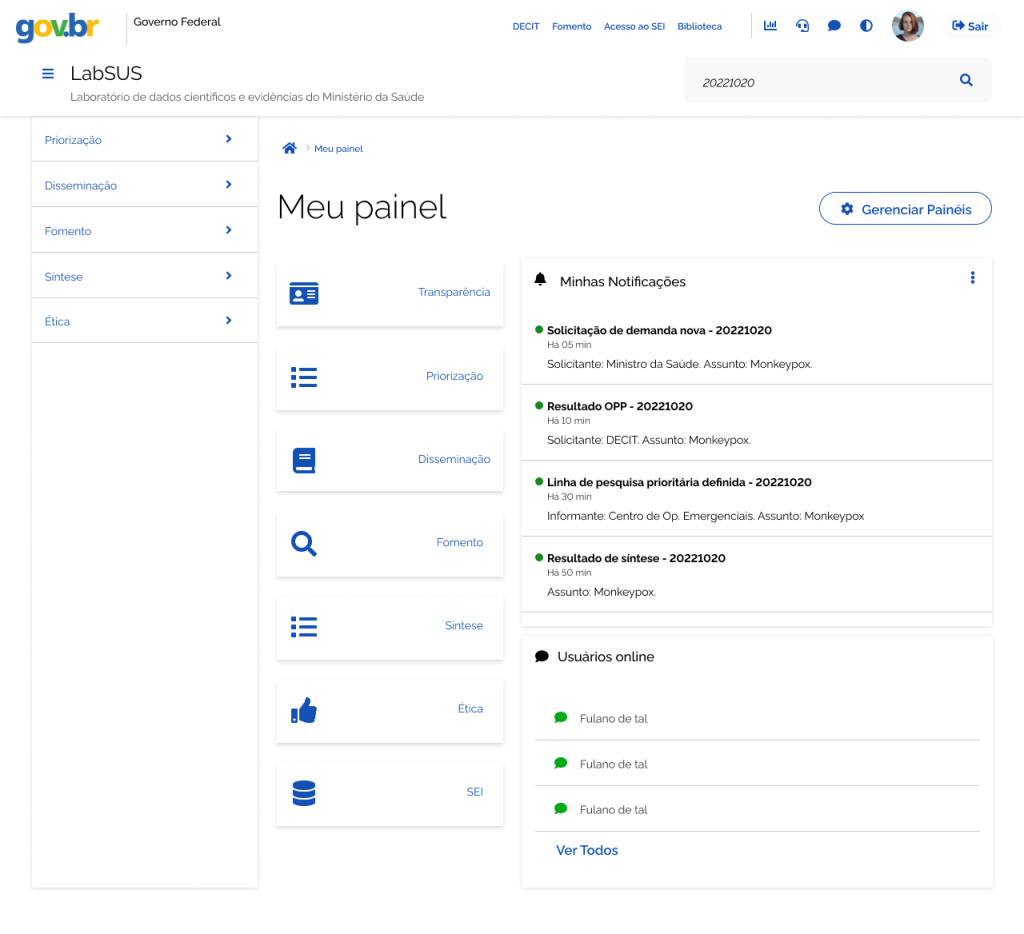
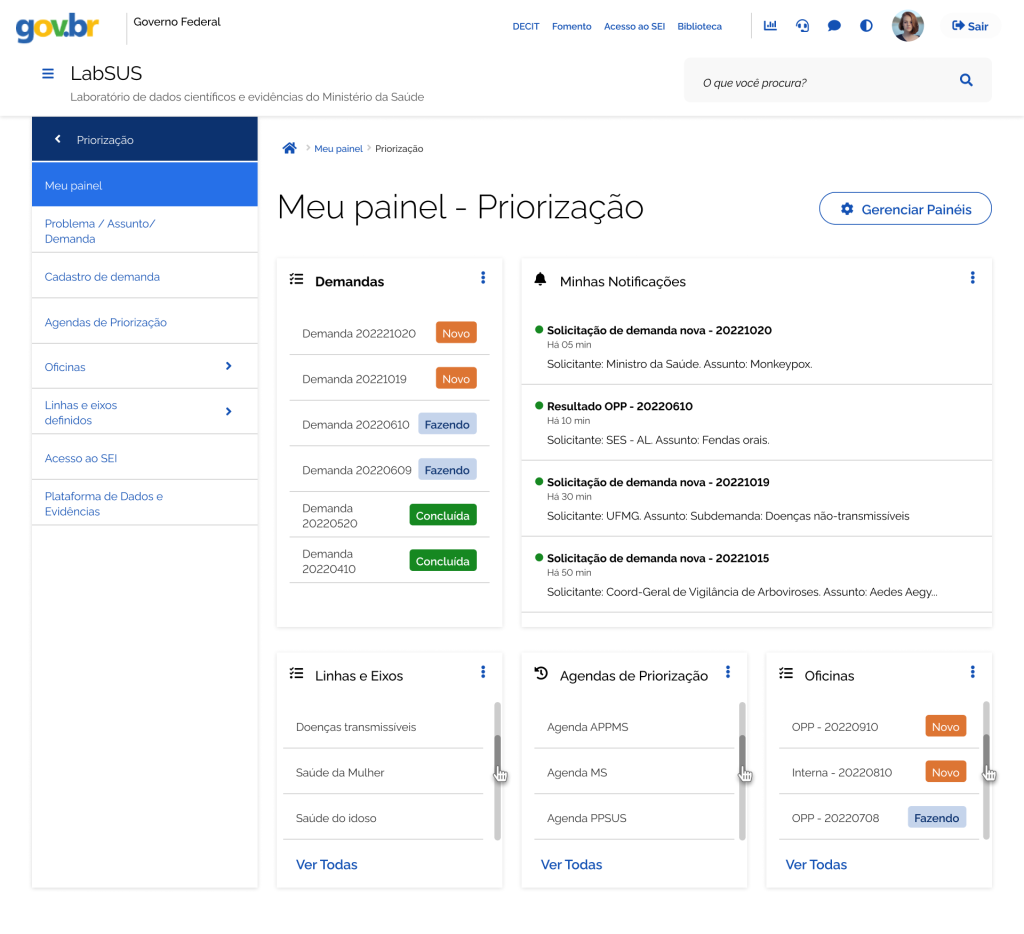
Together, we have developed the concept of LabSUS, a digital laboratory that centralizes all the scientific data from several databases, using AI to read and turn this data into personalized dashboard, to speed up the process of evidences identification and reading, as well as decision making and public policies for the public health care system.
My team was one of the 5 finalists among 65 subscriptions.
Project development
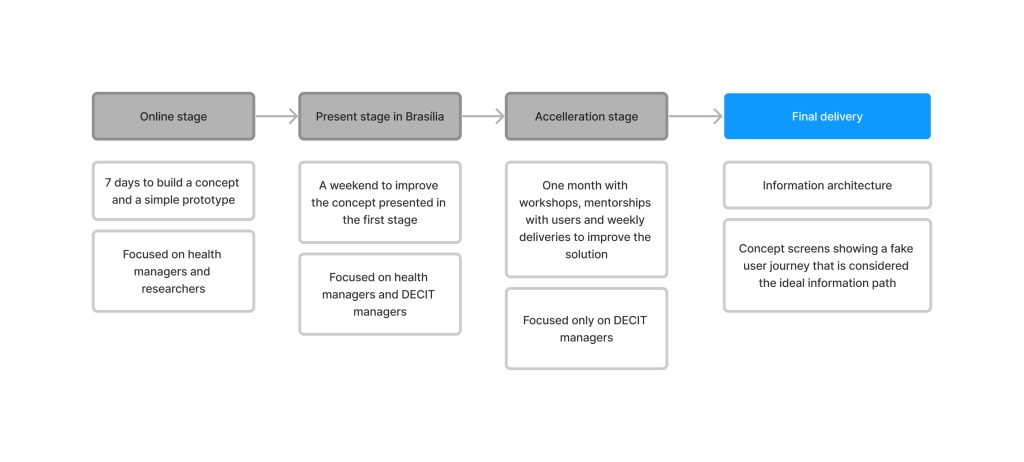
Online stage
We proposed a basic dashboard to illustrate the screens, along with a backend architecture to integrate the different databases.
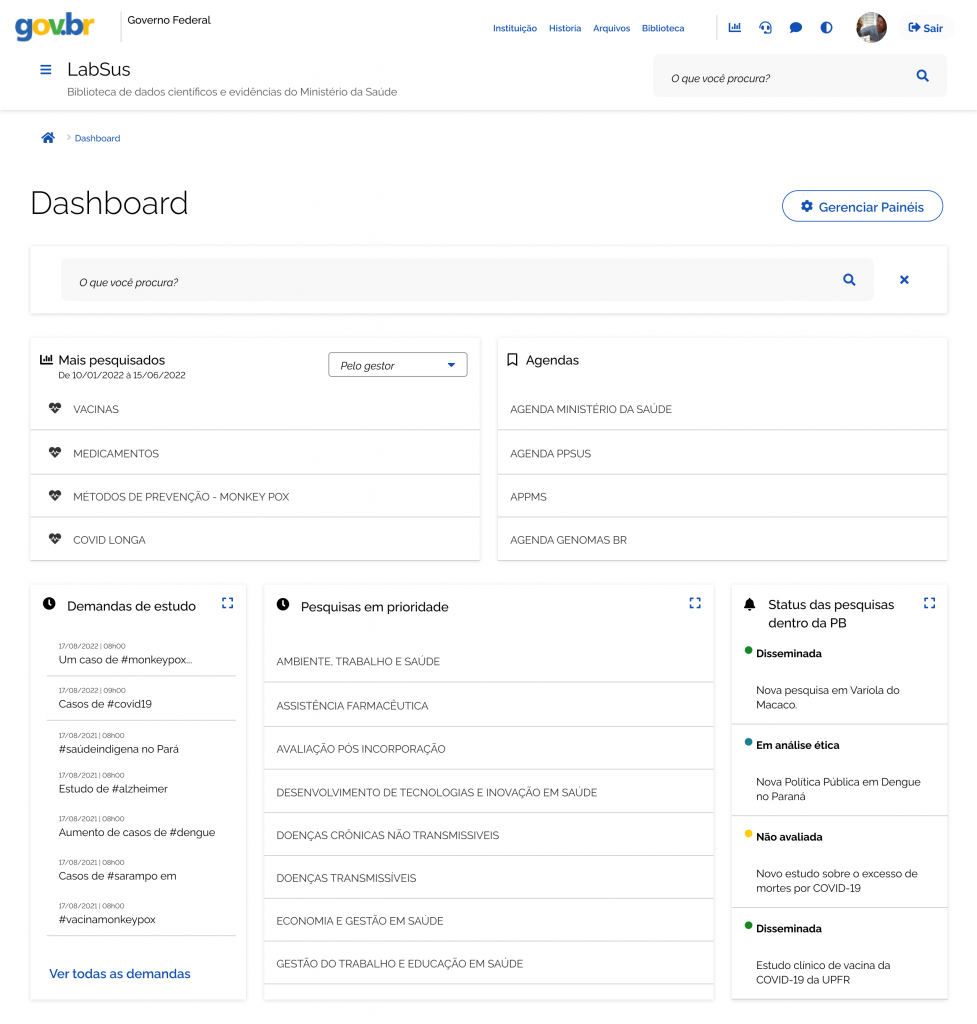
I focused on the users needs and in the end I developed basic screens, using the Government Design System, which is a clever solution, considering the service is supposed to be linked to the Federal Government main website.
You can check the pitch (it is in Portuguese):
Present stage in Brasilia
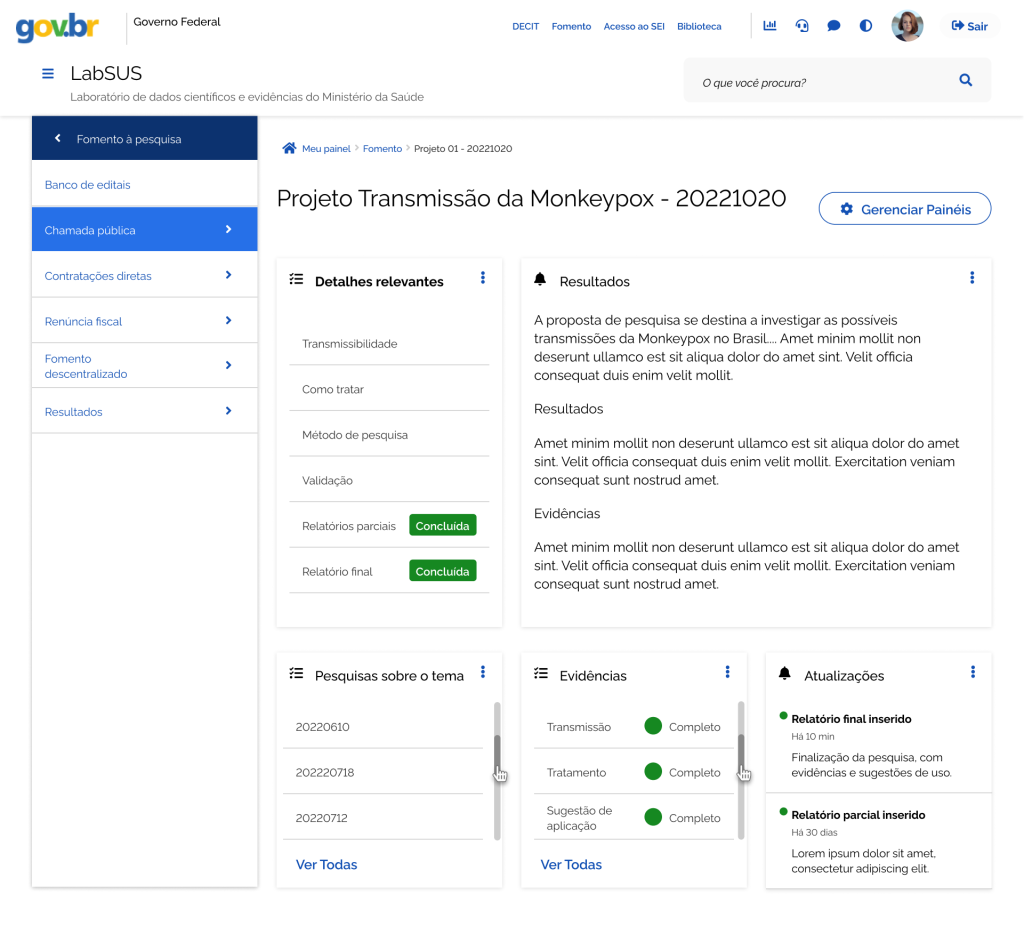
We improved the previous concept, adapting the screens according to a small information architecture we have developed according to the data provided to us.
Acceleration
We received the demand to focus only in one user: the DECIT manager, that became clear to be the primary user of the solution.
Studying again the pains and needs deeply
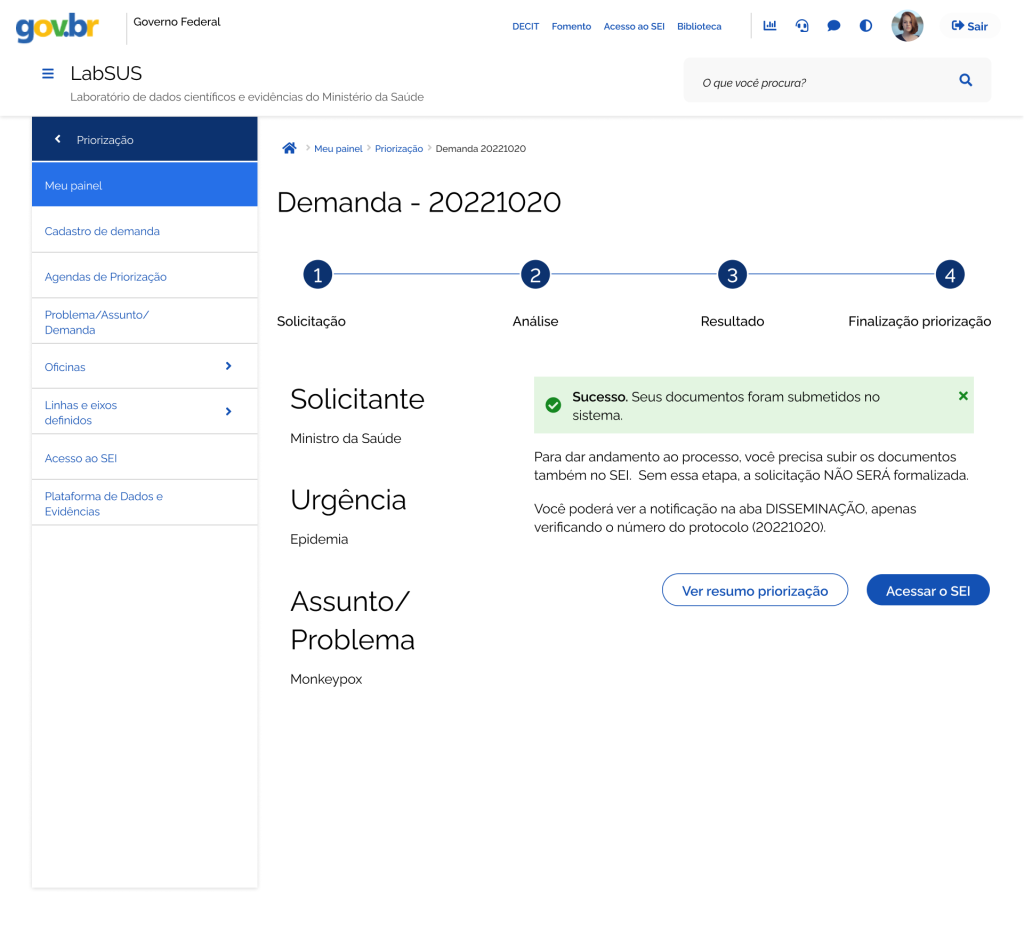
We had a couple of weeks to study the real pain of the manager in all the journey of a demand:
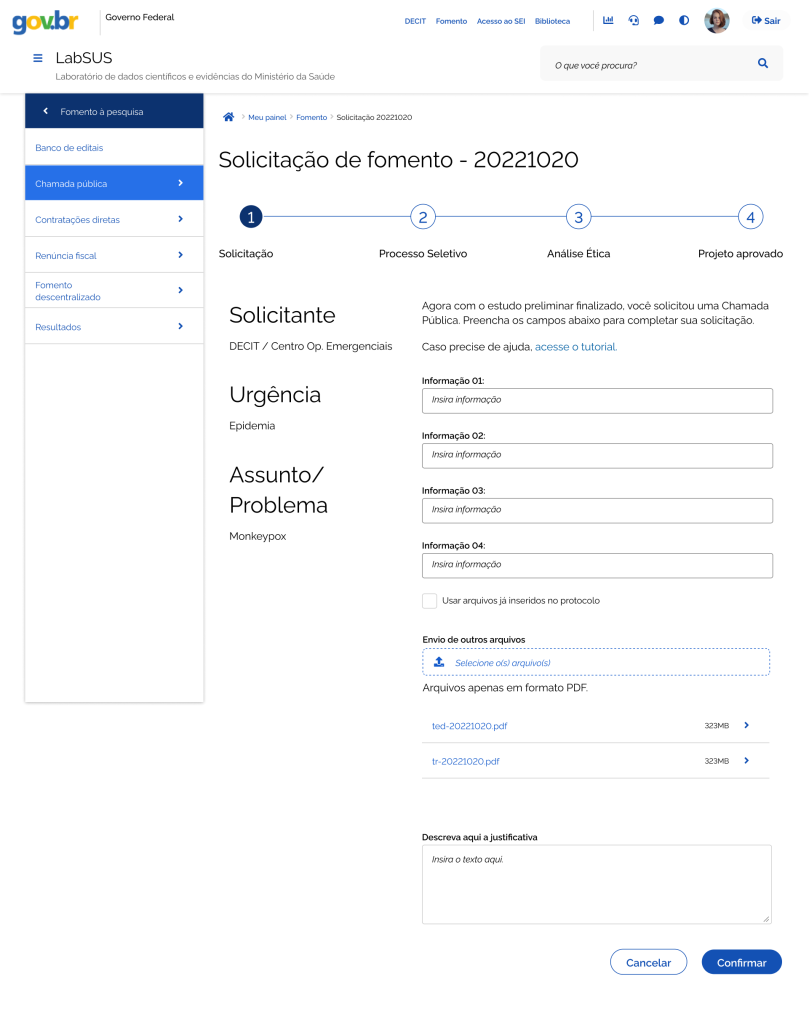
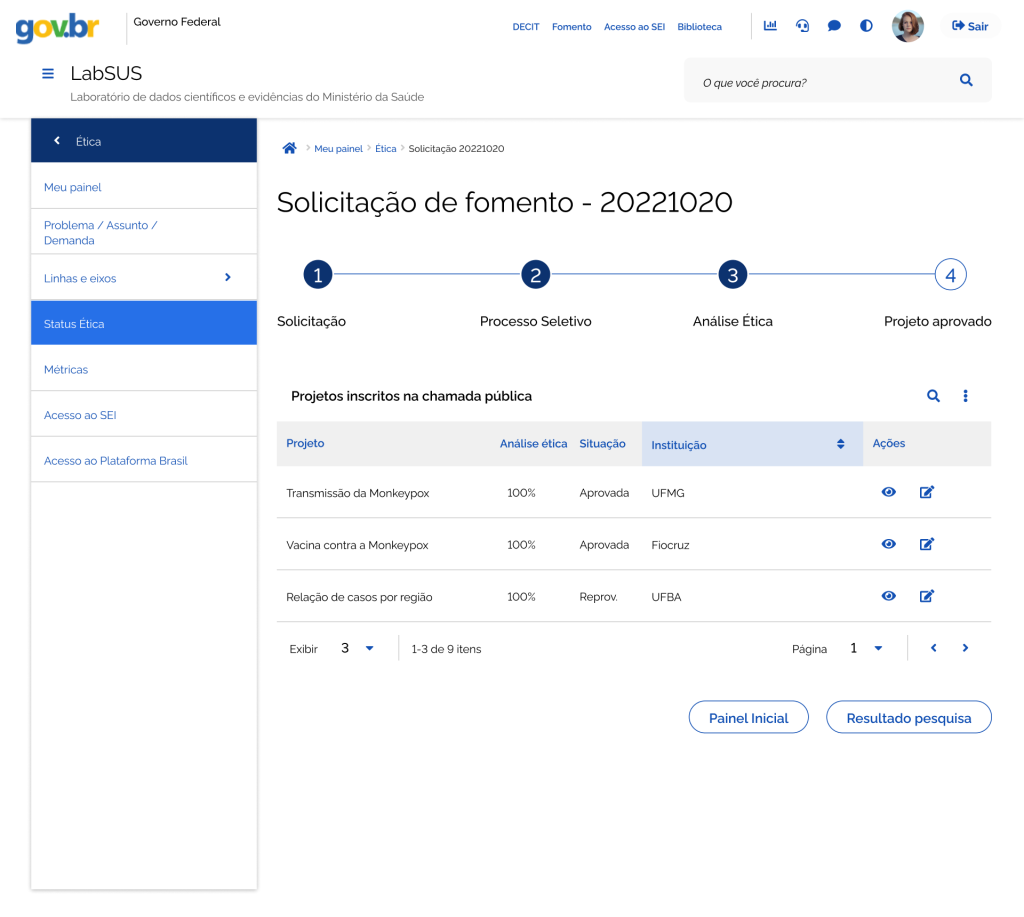
As an factitious example – A monkeypox outbreak, in an overview:
They need to analyse what needs to be prioritized, what they already have as scientific evidence available in known databases. In case there is a lack of information, a funding is necessary to investigate it further. It has a great process to select, investment and researches monitoring, until there are enough evidences to be used as a base to public policies, to determine the Federal Government actions to fight and treat the monkeypox.
There we have the great problem:
- To go on this journey, there is not a system that automatizes the processes and accelerates the information access;
- All the processes are still very manual, which causes several complaints of delays and errors in deliveries;
- Governing managers many times choose other databases over DECIT, as it is not a reference in evidences promotion;
- Besides, the department does not have a centralized control of all its investments and if these investments are useful to the public health care system, creating an information gap about the investments effectiveness.
Development
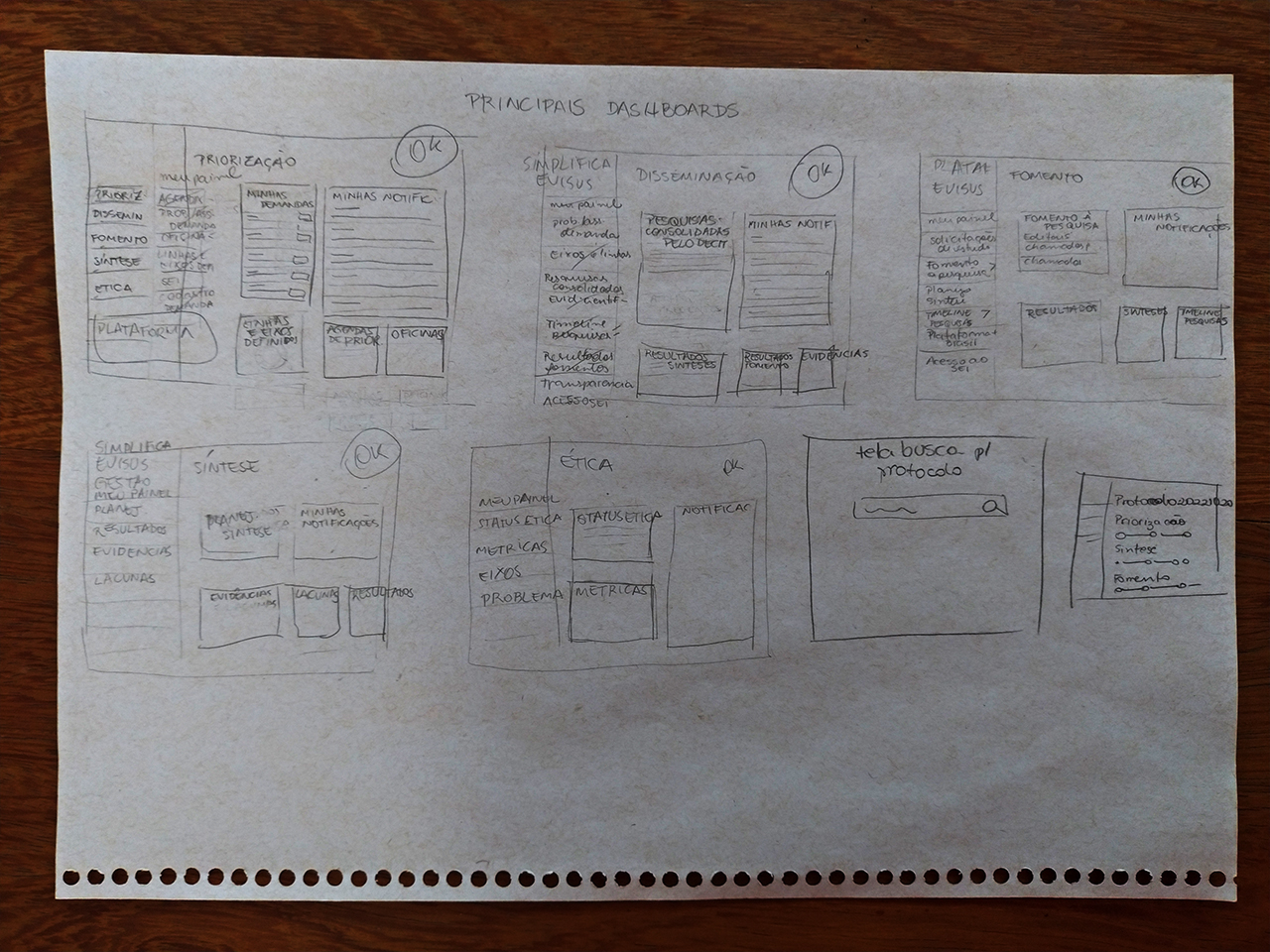
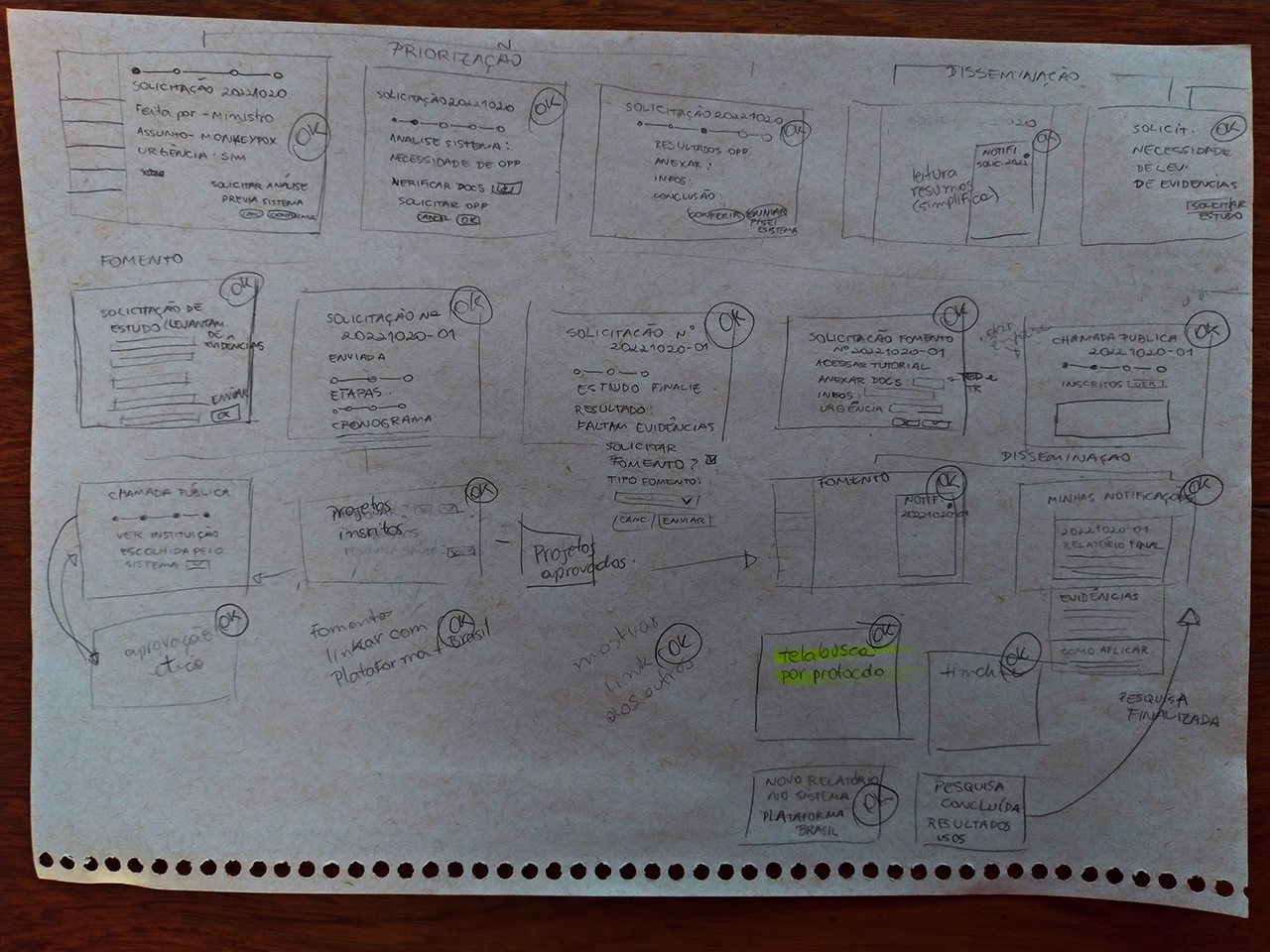 Previous wireframes
Final Prototytpe
Conclusions
This learning journey about the Ministry, DECIT, Public Health Care System (SUS), scientific evidence and so on, was arduous and fullfilling.
It was a lot of absorbed information during these 6 months. I could meet many people that work hard to make the SUS a better public health care system to all brazilians. There are flaws and problems, but there are a lot of people that work everyday to overcome politics and improve the system.
I joined this project simply to participate in a hackathon to have a case to write in my portfolio, but in the end, I fell in love with the field and maybe I’ll study more in the future.
My team was amazing and we have learnt a lot together. I simply didn’t know anything about public health before this program and now I feel I still have a lot to learn.
The DECIT problem is VERY COMPLEX. We have just started a journey to solve their pains, so we are confident that our proposal will improve the SUS in the end.
I hope to be part of its evolution, since it is one of the voluntary projects in my career that made me very proud!
E viva o SUS!